
Free Priority Shipping on USA orders over $150 – 24‑hr processing – Live phone support
$600.00
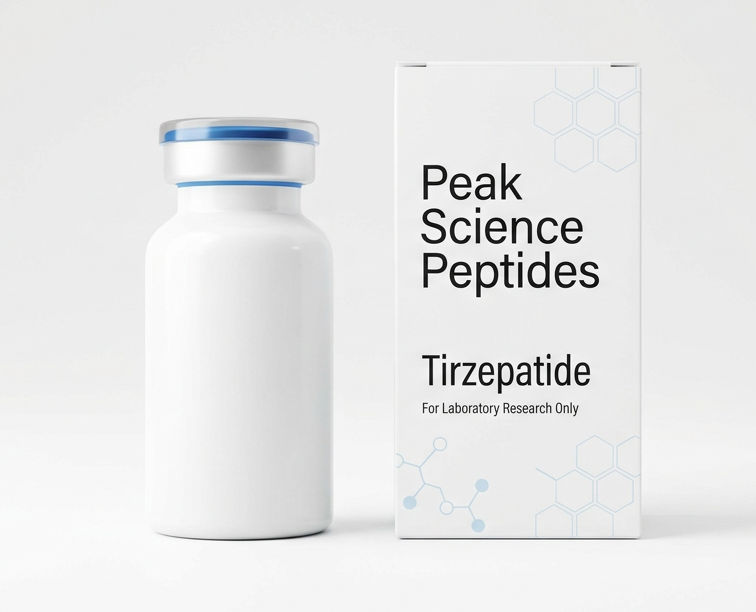
Tirzepatide is a synthetic, 39–amino acid peptide designed as a dual agonist of the glucose‑dependent insulinotropic polypeptide (GIP) and glucagon‑like peptide‑1 (GLP‑1) receptors, making it a key tool for advanced metabolic and endocrine research. This twincretin structure allows investigators to explore how simultaneous GIP and GLP‑1 receptor activation influences insulin secretion, glucagon suppression, gastric emptying, appetite regulation, and energy balance in preclinical models.
Peak Science Peptides supplies tirzepatide as a pharmaceutical‑grade research peptide, supported by independent third‑party laboratory testing and certificates of analysis (COAs) for identity, purity, and potency. This product is intended strictly for in vitro, ex vivo, and other regulated laboratory applications; it is not approved for human consumption, medical use, or any form of therapeutic administration.
In research settings, tirzepatide is classified as a long‑acting incretin‑based peptide that combines GIP receptor agonism with GLP‑1 receptor agonism in a single linear chain. The sequence is based on human GIP and is conjugated at a lysine residue to a C20 fatty diacid via a hydrophilic linker, a modification that increases albumin binding and prolongs circulating half‑life in experimental systems.
This dual‑targeted profile has made tirzepatide a focus of numerous preclinical and clinical studies exploring its impact on glycemic control, β‑cell function, body‑weight regulation, adiposity distribution, and cardiometabolic biomarkers. Published data from 2022–2025 show substantial improvements in insulin sensitivity, fasting and postprandial glucose, and weight‑related outcomes in studied populations, positioning tirzepatide as a key model compound for understanding next‑generation incretin pharmacology.
Tirzepatide offers several features that make it valuable in laboratory and translational research:
All applications must remain within controlled laboratory environments and comply with local regulations governing peptide research materials.
Peak Science Peptides focuses on providing high‑purity, research‑only compounds that support reproducible experimental design and data integrity. Each tirzepatide batch is synthesized to pharmaceutical‑grade standards and undergoes independent third‑party analytical testing, including high‑performance liquid chromatography (HPLC) and mass spectrometry, to confirm identity, purity, and concentration before release.
Researchers receive a detailed certificate of analysis (COA) with each unit, ensuring transparent documentation for quality control systems, standard operating procedures (SOPs), and institutional review requirements. All tirzepatide supplied by Peak Science Peptides is intended exclusively for laboratory research and is not marketed or sold as a drug, supplement, or therapeutic product.
Researchers should store and handle tirzepatide according to standard peptide laboratory practices and institutional biosafety protocols.
Tirzepatide is widely used to study integrated incretin biology, particularly how combined GIP and GLP‑1 receptor activation impacts glucose regulation, insulin secretion, and energy balance in preclinical models. Investigators also employ it in projects focused on weight‑related outcomes, adipose distribution, and cardiometabolic risk markers to better understand mechanisms of metabolic disease and potential future therapeutic strategies.
At the molecular level, tirzepatide binds and activates both the GIP receptor (GIPR) and the GLP‑1 receptor (GLP‑1R), triggering intracellular signaling cascades that enhance glucose‑dependent insulin secretion and reduce glucagon output. This dual agonism also influences gastric emptying, appetite‑related signaling, and lipid metabolism, making the peptide useful for dissecting complex neuroendocrine and metabolic networks in experimental systems.
No. Tirzepatide supplied by Peak Science Peptides is designated strictly for research use only and is not intended for human consumption, clinical application, or any therapeutic administration. This classification aligns with common regulatory and ethical guidelines governing non‑approved investigational compounds in laboratory environments.
Each tirzepatide batch undergoes third‑party analytical testing to verify peptide identity, purity, and concentration using industry‑standard methods such as HPLC and mass spectrometry before distribution. A detailed certificate of analysis accompanies every lot, enabling research teams to document material specifications in their protocols, quality systems, and publications where appropriate.
In research planning, laboratories typically consider peptide stability, storage conditions, compatibility with their assay systems, and alignment with institutional biosafety and ethical guidelines for handling bioactive compounds. Investigators also evaluate how tirzepatide’s dual‑receptor profile and prolonged half‑life may influence experimental design, such as timing of sample collection, biomarker selection, and choice of in vitro or in vivo models.

Reviews
There are no reviews yet.