
Free Priority Shipping on USA orders over $150 – 24‑hr processing – Live phone support
$700.00
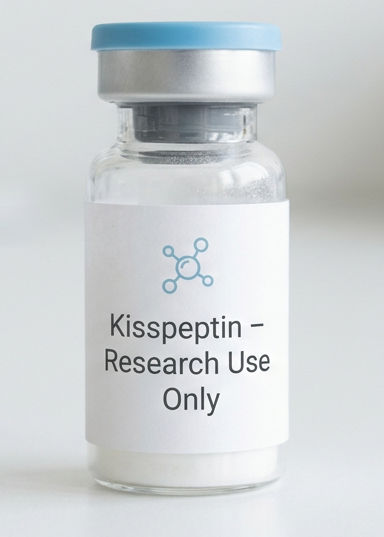
Kisspeptin is a neuropeptide encoded by the KISS1 gene that plays a central regulatory role in the mammalian reproductive endocrine axis, particularly through stimulation of gonadotropin-releasing hormone (GnRH) neurons in the hypothalamus. Originally identified in 1996 as a metastasis-suppressor peptide (also called “metastin”), Kisspeptin has since become a key focus in reproductive biology, puberty onset, and neuroendocrinology research. Current studies investigate Kisspeptin signaling in areas such as puberty initiation, fertility disorders, psychosexual function, and metabolic regulation, making it a versatile target for advanced preclinical and translational research models. Peak Science Peptides supplies pharmaceutical-grade Kisspeptin synthesized under strict quality controls and verified by independent third-party laboratory testing to support robust, reproducible scientific data.
All Kisspeptin supplied by Peak Science Peptides is designated strictly for laboratory and in vitro research use only, is not a drug, and is not intended for human or veterinary administration.
Kisspeptin from Peak Science Peptides is supplied exclusively for controlled laboratory experiments, including in vitro, ex vivo, and appropriate in vivo research conducted under institutional and regulatory oversight. It is not approved by the FDA or other regulatory agencies as a therapeutic product, and it must not be used for diagnosis, treatment, or any form of personal administration. Researchers are responsible for complying with all local guidelines, institutional review processes, and biosafety regulations when working with this peptide.
Kisspeptin refers to a family of peptide products derived from the KISS1 gene, which are generated by proteolytic processing of a common precursor, prepro-kisspeptin. These peptides bind to the G protein–coupled receptor KISS1R (also known as GPR54) and are recognized as critical upstream regulators of GnRH neurons in the hypothalamus. Due to this central role, Kisspeptin is considered a master regulator of the hypothalamic–pituitary–gonadal (HPG) axis in many mammalian species.
Researchers commonly use Kisspeptin to investigate reproductive endocrinology, including mechanisms of puberty onset, ovulation, and gonadotropin secretion. It is also employed in models examining hypogonadotropic hypogonadism, infertility, and other HPG-axis disorders. Beyond reproduction, Kisspeptin is studied for its original anti-metastatic properties in oncology, as well as emerging roles in behavior (sexual motivation, partner preference) and metabolic regulation (body weight, energy expenditure, and adiposity).
As of recent literature and regulatory updates, Kisspeptin is primarily an investigational agent rather than a routinely approved therapy. Early clinical trials have explored its potential in fertility and psychosexual disorders, but major agencies such as the FDA have not granted broad, standard therapeutic approvals. Access to Kisspeptin in clinical contexts typically occurs within structured research studies or highly specialized fertility programs, distinct from research-only material supplied by reagent vendors.
Compared with many downstream reproductive hormones, Kisspeptin acts at a higher regulatory tier by directly stimulating GnRH neurons and thereby modulating both LH and FSH secretion. This upstream positioning allows investigators to probe central control mechanisms rather than only peripheral hormone responses. Additionally, Kisspeptin’s involvement in metastasis suppression, metabolic regulation, and behavior provides a broader systems-biology scope than many single-role reproductive peptides.
For rigorous experimental design, laboratories typically prioritize high peptide purity, verified sequence identity (e.g., by mass spectrometry and HPLC), and transparent third-party analytical documentation. Independent COAs help ensure that contaminants or sequence variants do not confound sensitive endocrine or signaling readouts. Pharmaceutical-grade synthesis standards and consistent batch characteristics support reproducibility across longitudinal and multi-center studies. Peak Science Peptides emphasizes these attributes for all Kisspeptin lots to align with demanding academic and industry research requirements.

Reviews
There are no reviews yet.