
Free Priority Shipping on USA orders over $150 – 24‑hr processing – Live phone support
$600.00
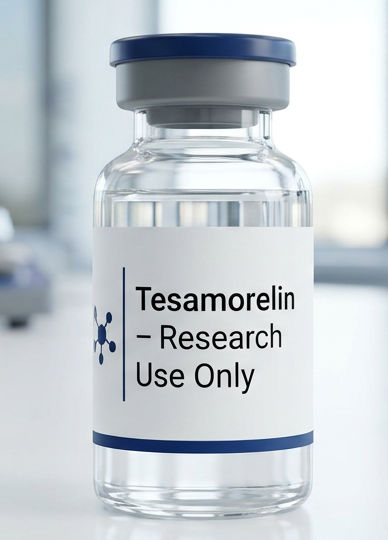
Tesamorelin is a synthetic 44–amino‑acid analogue of growth hormone–releasing hormone (GHRH), engineered to closely mimic endogenous GHRH while exhibiting greater molecular stability in experimental settings. By binding to GHRH receptors on anterior pituitary somatotroph cells, tesamorelin has been shown to stimulate pulsatile growth hormone (GH) release and elevate insulin‑like growth factor‑1 (IGF‑1) levels in clinical research models. This GH–IGF‑1 axis modulation has made tesamorelin a focal point in studies of visceral adiposity, lipid metabolism, and body‑composition regulation, particularly in the context of HIV‑associated lipodystrophy and related metabolic disturbances.
At Peak Science Peptides, tesamorelin is offered strictly as a research‑grade peptide to support controlled in vitro and in vivo investigations into growth hormone signaling, adipose tissue dynamics, and downstream metabolic pathways. Each batch is manufactured to pharmaceutical‑grade quality standards and is accompanied by third‑party laboratory analysis, providing documented verification of identity, purity, and potency for reproducible experimental outcomes. This product is not intended for human consumption, medical use, or any application outside of approved laboratory and institutional research.
Tesamorelin’s biochemical design and documented clinical data make it a versatile tool for investigators studying endocrine and metabolic mechanisms.
All tesamorelin supplied by Peak Science Peptides is intended for qualified researchers operating within appropriate regulatory frameworks, with full documentation available upon request to support method development, replication, and peer‑reviewed publication.
In published and ongoing investigations, tesamorelin is positioned as a model compound for probing GH‑mediated regulation of adipose and hepatic metabolism.
These research domains illustrate why tesamorelin is frequently selected as a reference GHRH analog in advanced endocrine and metabolic research programs worldwide.
Peak Science Peptides prioritizes rigorous quality control to support precise and reproducible scientific work.
Researchers are responsible for ensuring that all experiments involving tesamorelin comply with institutional review processes, biosafety standards, and applicable local regulations.
Tesamorelin is a synthetic peptide analog of human growth hormone–releasing hormone (GHRH), consisting of 44 amino acids with an N‑terminal modification that enhances its stability versus native GHRH. It is designed to mimic endogenous GHRH activity at the pituitary level, making it a useful tool for studying GH axis regulation, IGF‑1 dynamics, and associated metabolic processes in controlled research environments.
In experimental settings, tesamorelin binds to GHRH receptors on pituitary somatotroph cells, activating G‑protein‑coupled signaling pathways that raise cAMP, stimulate GH gene transcription, and promote pulsatile GH secretion. The resulting increase in GH leads to elevated IGF‑1 and downstream effects on lipolysis, lipid handling, and body‑composition‑related endpoints, which can then be quantified as part of metabolic research protocols.
Most published work on tesamorelin centers on HIV‑associated lipodystrophy, where it has been used to investigate mechanisms underlying visceral fat accumulation and cardiometabolic risk. Additional research domains include hepatic fat and NAFLD‑related pathways, lipid‑profile modulation, skeletal muscle area and density, and potential neuro‑cognitive effects linked to GH and IGF‑1 signaling.
Clinical literature notes that tesamorelin‑mediated GH and IGF‑1 increases may influence glucose tolerance and can be associated with adverse events such as injection‑site reactions, arthralgia, and peripheral edema in studied populations. For this reason, tesamorelin is typically evaluated within carefully controlled protocols, and any translation of findings beyond the research setting must rely on formal regulatory approval and medical oversight, which are outside the scope of this research‑only product.
No. Tesamorelin supplied by Peak Science Peptides is designated strictly “For Research Use Only” and is not approved for human, diagnostic, or therapeutic applications. It is offered exclusively to qualified laboratories and institutions for non‑clinical investigations into growth hormone–releasing mechanisms, metabolic regulation, and related biochemical pathways, subject to all applicable research and safety guidelines.
Reviews
There are no reviews yet.