
Free Priority Shipping on USA orders over $150 – 24‑hr processing – Live phone support
$200.00
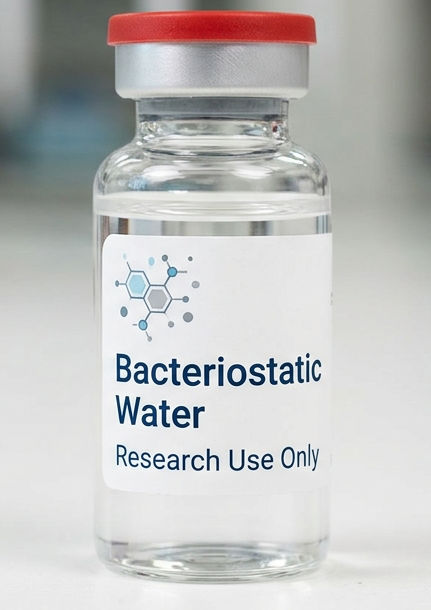
Bacteriostatic Water is a sterile, non-pyrogenic water solution containing 0.9% benzyl alcohol as a preservative to inhibit bacterial growth in laboratory settings. This formulation is widely used as a solvent or diluent for compatible compounds in controlled research environments, allowing multiple withdrawals from the same vial when proper aseptic technique is maintained. Peak Science Peptides provides pharmaceutical-grade Bacteriostatic Water that meets stringent quality specifications and is supported by independent third‑party laboratory testing for identity, purity, and sterility.
All Bacteriostatic Water offered by Peak Science Peptides is designated strictly for laboratory research use only and is not intended for human or veterinary use.
Bacteriostatic Water from Peak Science Peptides is intended exclusively for controlled laboratory experimentation, including in vitro and other approved research applications. It is not approved as a therapeutic product and must not be used for diagnosis, treatment, or any form of administration to humans or animals. Researchers are responsible for following all institutional, regulatory, and biosafety guidelines when incorporating this product into experimental protocols.
Bacteriostatic Water is typically composed of 99.1% sterile water and 0.9% benzyl alcohol, which serves as a preservative to inhibit bacterial growth. The benzyl alcohol concentration is maintained in the approximate 0.9–1.1% range, with pH commonly specified between 4.5 and 7.0 according to pharmacopeial guidance. This composition allows the solution to remain stable and suitable for repeated withdrawals when proper sterile technique is used.
In research environments, Bacteriostatic Water is primarily used as a solvent or diluent for reconstituting or diluting compatible substances such as peptides and other laboratory reagents. It supports controlled preparation of solutions for in vitro assays, stability studies, and other experimental applications where repeated vial access is advantageous. Because it is formulated to inhibit bacterial growth rather than kill bacteria outright, it reduces the risk of preservative-related interference in sensitive analytical or biological systems.
Both products are sterile water-based solutions, but Bacteriostatic Water contains 0.9% benzyl alcohol, while standard sterile water for injection does not include a preservative. As a result, Bacteriostatic Water can typically be accessed multiple times (under appropriate storage and aseptic conditions), whereas preservative-free sterile water is generally intended for single use. This difference makes Bacteriostatic Water especially useful in research protocols requiring multiple withdrawals over a defined time window.
Researchers usually look for documented benzyl alcohol content (about 0.9%), conforming pH range, sterility, non-pyrogenicity, and compliance with relevant pharmacopeial standards. Third-party testing and clear COAs are considered important for confirming that the solution is free from microbial contaminants and meets compositional specifications. Pharmaceutical-grade manufacturing with tight process controls helps ensure consistency across batches, which is critical for reproducible experimental results.
Publicly available labeling and technical literature consistently describe Bacteriostatic Water as a diluent intended to be used only in accordance with specific product and regulatory guidance, not as a standalone injectable solution. In many official sources, it is emphasized that the solution’s role is limited to diluting or dissolving compatible substances, and it is not appropriate for direct infusion or unsupervised use. Peak Science Peptides supplies Bacteriostatic Water strictly for research purposes, and it must not be used for human or veterinary administration in any context.
Reviews
There are no reviews yet.